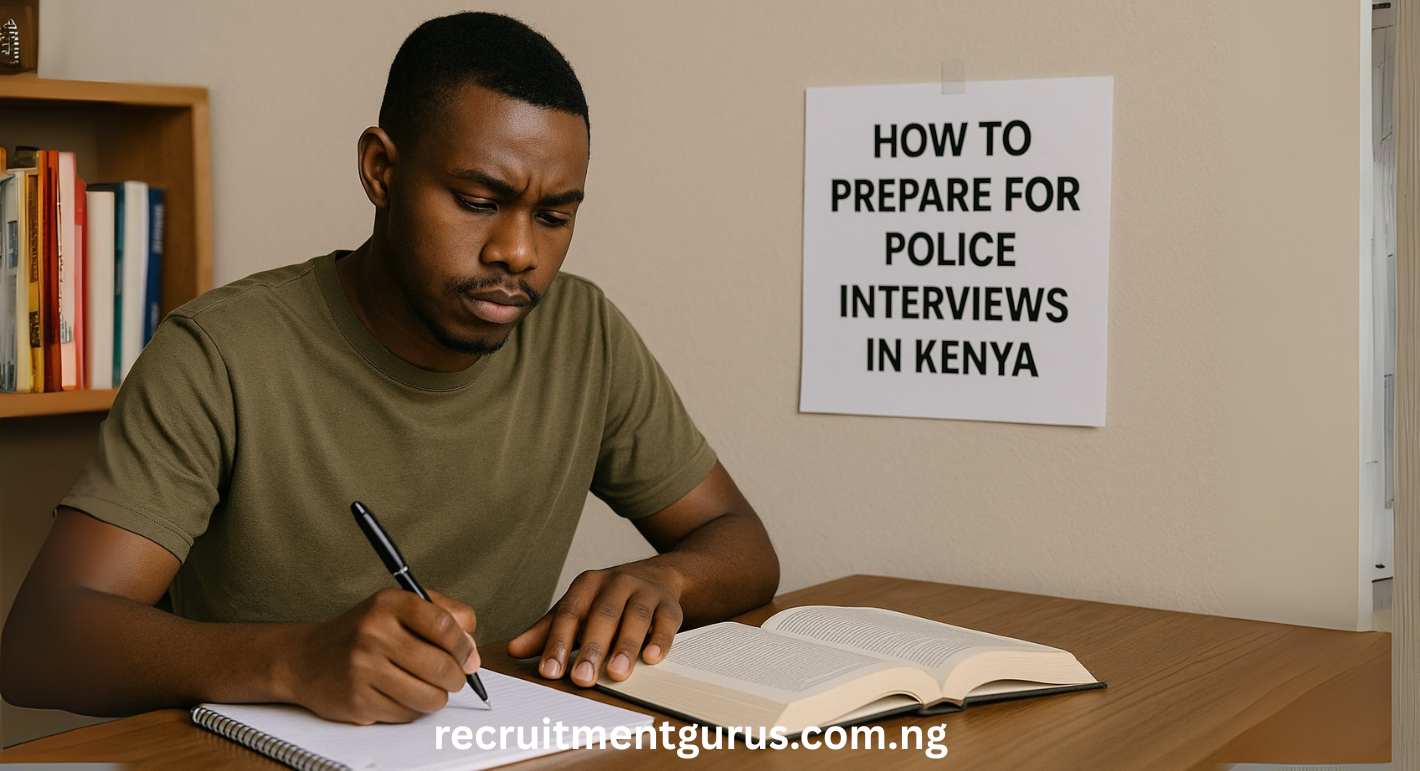
How to Prepare for Police Interviews in Kenya: A Step-by-Step Guide
Police recruitment interviews in Kenya such as for the Kenya Police Service, Kenya Defence Forces (KDF), or National Youth Service (NYS) are structured, competitive, and designed to evaluate both your mental and emotional readiness for the job. Whether you’re applying for a cadet or constable position, knowing how to prepare effectively for the police interview can be the difference between success and rejection.
This guide will walk you through key steps and tips on how to confidently prepare for your police interview in Kenya.
Understand the Role and Duties of a Police Officer
Before the interview, research the Kenya Police Service structure, its mandates, your potential duties, and current national security concerns. Familiarity with this information shows commitment and interest.
Helpful tip:
Visit https://www.nationalpolice.go.ke to understand the latest reforms and expectations.
Know the Recruitment Stages
A typical Kenya Police recruitment process includes:
- Physical fitness assessment
- Document verification
- Medical exam
- Written exams
- Oral interview
The interview often tests your reasoning, character, and awareness of public service values.
Common Police Interview Questions
Expect questions like:
- Why do you want to join the police service?
- What do you know about community policing?
- How would you handle corruption or misconduct?
- Tell us about a time you faced a difficult situation and how you resolved it.
- Are you willing to be posted anywhere in Kenya?
Pro tip: Practice answering these questions aloud or with a friend.
Brush Up on Current Affairs
You may be asked about:
- Kenya’s Constitution (especially Chapter 6 on Leadership & Integrity)
- Devolution and national governance
- Recent national security incidents
- Kenya’s police reforms
Stay updated through reliable sources like Citizen TV, The Star, or Daily Nation.
Dress Smartly
Your dressing is part of your first impression. For men: a clean shirt, trousers, and polished shoes. For women: a neat dress or blouse with a skirt or trousers. Avoid loud colors or heavy accessories.
Demonstrate Discipline and Respect
From the moment you walk in, your conduct is observed. Greet the panel respectfully, maintain eye contact, and sit upright. Never interrupt the panel members, and always speak clearly and calmly.
Highlight Relevant Qualities and Skills
Mention any skills or experiences that align with police work, such as:
- Volunteering in your community
- Leadership roles
- Physical fitness and team sports
- Ability to work under pressure
Also Read
Ask Questions (If Given the Chance)
Some panels allow applicants to ask questions. You might ask:
- “What are the next steps in the recruitment process?”
- “Are there specific training programs for new recruits?”
This shows interest and maturity.
Review the Ethical Code of Conduct
Kenyan police officers must operate under the National Police Service Code of Conduct. Being familiar with this, especially the emphasis on integrity and human rights, will score you points.
Stay Calm and Be Yourself
Don’t memorize answers; instead, understand concepts and speak from the heart. Interviewers can spot scripted responses. Let your personality, passion, and authenticity shine through.
Conclusion
Preparation is key to acing your police interview in Kenya. With a strong understanding of the role, a calm and confident approach, and good knowledge of national issues and ethics, you’ll stand a better chance of success.
If you’re gearing up for the upcoming Kenya Police Recruitment 2025/2026, bookmark this guide and revisit it as part of your preparation.